
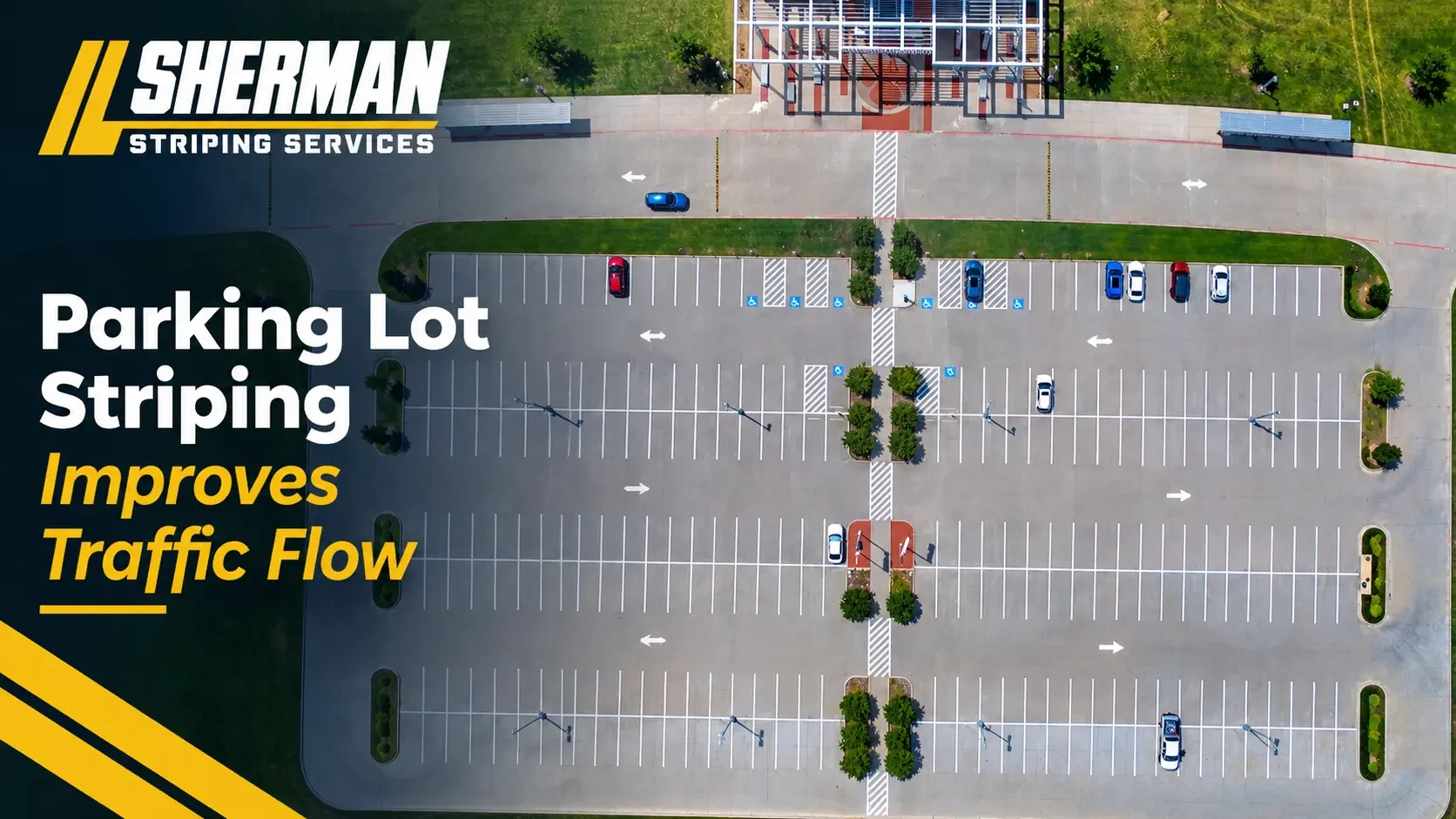
How Parking Lot Striping Improves Traffic Flow on Commercial Properties
Effective parking lot striping gives drivers clear visual guidance, organizes parking spaces, supports predictable vehicle movement, and separates pedestrian areas from traffic lanes. For commercial properties, parking lot sealing and striping helps maintain visible markings while commercial parking lot striping near me searches often reflect a need for reliable local service. A well-planned layout also supports accessibility, efficient space use, and a more orderly customer experience.
Commercial parking lots need more than visible parking spaces. They need a layout that helps drivers understand where to enter, where to turn, where to park, and how to exit without unnecessary hesitation. Clear pavement markings provide visual direction and help organize vehicle movement across busy properties.
Property managers who search for commercial parking lot striping near me often need more than fresh paint. They may need to correct faded markings, improve confusing traffic patterns, reorganize parking spaces, or create a more functional layout. Professional line striping and restriping addresses these needs by connecting individual parking spaces with the larger circulation pattern of the property.
Clear Parking Spaces Give Drivers Better Direction
Drivers' decisions are made quickly when they enter a commercial parking lot. To eliminate parking confusion, clearly defined parking stalls indicate vehicle alignment and where parking spaces start and end.
Blown-out or discolored markings may cause uneven spacing between vehicles, or the potential to park outside of designated areas, or parts of drive aisles may be blocked out. These little issues can become more prominent at rush hour when lots of vehicles are competing for access.
Fresh, accurately positioned markings create a consistent visual structure. Drivers can identify parking rows more easily and follow the intended movement pattern without relying on guesswork.
Organized Drive Aisles Support Smoother Movement
Parking lots are an integral component of a greater circulation system. Aisles are used to access exits, walkways, loading areas, parking areas, and entrances. When areas are clearly marked for vehicles, drivers have greater visual guidance as to where their cars should go.
Directional arrows, lane markings, and stop markings add directional cues with pavement symbols to affirm movement within a professional layout. These signs assist drivers in being aware of their desired pathway prior to reaching a decision point.
The layout should reflect the actual uses of a given property. When determining the circulation plan, consider the type of property — such as a retail center, office property, or warehouse — where frequent use of the layout occurs. New parking layout design should account for vehicle volume, parking needs, entrances, and exits.
Proper Space Arrangement Helps Reduce Parking Conflicts
Parking orientation affects how vehicles enter and leave spaces. Depending on the property, perpendicular or angled parking may support different circulation patterns. Spaces set at an angle tend to guide vehicles in one direction, while perpendicular spaces can accommodate alternate aisles. Layout must be determined based on site dimensions, traffic volume, access facilities, and applicable local requirements.
A professional parking layout must balance parking capacity with vehicle movement. Additional spaces will not improve a lot's quality if vehicles have difficulty maneuvering between them. A usable design allows drivers adequate space when entering, exiting, or progressing to their intended destination.
Directional Markings Help Drivers Make Faster Decisions
Large commercial facilities often have multiple entrances and exits, several parking sections, loading areas, and pedestrian access points. Without visual guidance, drivers may hesitate or turn around unnecessarily.
Basic signs and pavement markings convey whether a certain direction of travel is allowed, where cars should slow down, and which lanes require turns. Traffic signs combined with pavement markings create a complete directional system for commercial properties.
Property managers can also use markers to identify areas of special use. Fire lanes, loading areas, reserved spaces, and pedestrian crossing areas must be clearly marked so drivers understand the purpose of each zone.
A coordinated parking lot sealing and striping project also provides an opportunity to review whether existing pavement markings still reflect how people use the property.
Pedestrian Markings Add Another Layer of Organization
Commercial parking lots serve more than vehicles. These areas also function as pedestrian corridors for customers, employees, delivery staff, and visitors. Marked pedestrian crossings create expected crossing points. When crossing points are linked to building entrances and accessible pathways, pedestrians are better guided as to where they should cross vehicle lanes.
The Access Board identifies that marked crossings can provide pedestrian protection when an accessible route runs across a vehicular traffic lane. Vehicle and pedestrian traffic must both be considered when applying striping. A layout that works well for vehicles can still create problems if pedestrian routes are not clearly organized.
Regular Restriping Helps Preserve Traffic Patterns
Parking lot markings lose visibility over time due to vehicle traffic, weather exposure, surface wear, and maintenance activity. Once lines become difficult to see, drivers receive weaker visual guidance. Regular inspections help property managers identify faded stalls, missing directional arrows, worn accessible markings, and other areas that need attention.
Restriping also gives property managers an opportunity to review whether the current configuration still suits the property. Changes in tenant usage, customer behavior, loading patterns, or building use can all affect how vehicles move through a lot.
Regular restriping is especially important for managing pedestrian safety during high-traffic events. Small parking lots often defer restriping longer than they should — which can compound traffic flow problems over time.
Conclusion
Effective parking lot striping improves traffic flow by giving drivers visual direction, organizing parking spaces, defining travel areas, supporting pedestrian movement, and integrating accessibility requirements into the overall layout. When markings reflect how people actually use a property, vehicles can move through parking areas with less confusion.
For property managers considering parking lot sealing and striping, the project also provides an opportunity to evaluate whether the existing layout continues to support current traffic patterns and property needs. Sherman Striping Services provides commercial line striping and new parking layout design for properties across Sherman, North Texas, and Southern Oklahoma. Contact Sherman Striping Services for a free quote and to discuss the requirements of your commercial parking lot.
Frequently Asked Questions
How does parking lot striping improve traffic flow?
Parking lot striping improves traffic flow by giving drivers clear visual cues about where to park, how to navigate drive aisles, and where pedestrian crossings are located. Directional arrows, lane markings, and clearly defined stalls reduce hesitation and help vehicles move through the lot in an organized, predictable pattern.
How often should a commercial parking lot be restriped?
Most commercial parking lots benefit from restriping every one to two years, depending on traffic volume, weather exposure, and surface condition. High-traffic properties such as retail centers, medical offices, and warehouses may need more frequent attention. Regular inspections help identify faded markings before they create confusion or safety concerns.
What is the difference between restriping and a new parking layout design?
Restriping applies fresh paint over an existing layout to restore visibility of current markings. A new parking layout design reconfigures the lot — changing stall orientation, aisle width, traffic flow direction, or accessible space placement — to better suit current property use. Both services are available for commercial properties across North Texas and Southern Oklahoma.
Does parking lot striping include ADA-compliant accessible space markings?
Yes. ADA-compliant accessible space markings — including the required stall dimensions, access aisles, and International Symbol of Accessibility — are part of a complete parking lot striping project. Accessible markings must meet federal ADA Standards for Accessible Design and applicable local requirements. Sherman Striping Services applies accessible markings as part of new layout design and restriping projects.
What other pavement markings are typically included in a commercial striping project?
A commercial striping project may include parking stall lines, directional arrows, stop bars, fire lane markings, loading zone designations, pedestrian crosswalk markings, reserved space indicators, and handicap symbols. The scope depends on the property type, lot size, and current condition of existing markings.
Ready to get started?
Contact Sherman Striping Services for a free, no-obligation quote.